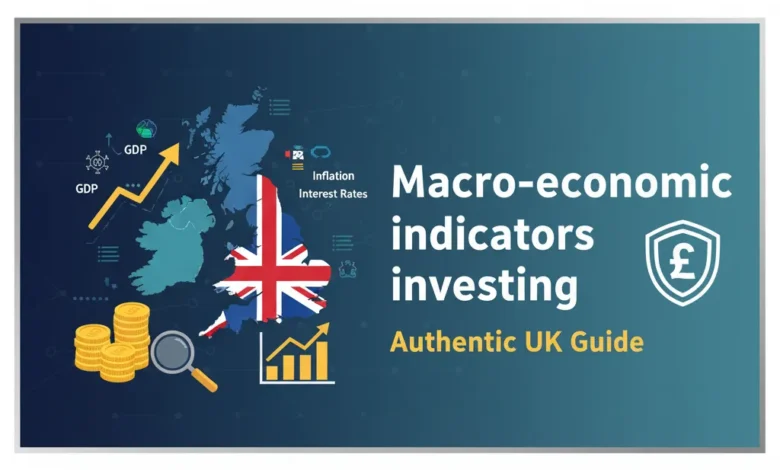
Macro-economic indicators investing Authentic UK Guide, Unlock UK investment opportunities! This guide explains how macro-economic indicators like inflation, GDP, interest rates, plus employment statistics influence the UK’s investment landscape, enabling you to make informed decisions plus potentially enhance your portfolio’s performance. Understanding these indicators is crucial for navigating the complexities of the UK economy plus identifying promising investment avenues.
Macro-economic indicators investing: A UK Perspective
Macro-economic indicators are statistical data points that provide insight into the overall health plus performance of an economy. For investors, these indicators serve as vital clues, helping them assess risk, predict market trends, plus allocate capital effectively within the UK. Monitoring these signals allows for a more nuanced understanding of the UK economic outlook, leading to more strategic investment choices.
Understanding Key UK Macro-economic Indicators
Several core indicators deserve careful consideration when investing in the UK economy. These include inflation rates, GDP growth, interest rates set by the Bank of England, employment statistics, retail sales figures, plus the trade balance.
Inflation: The Silent Eroder
Inflation measures the rate at which the general level of prices for goods plus services is rising, plus subsequently, purchasing power is falling. elevated UK inflation rates can erode the real value of investments, particularly fixed-income assets. The Consumer Price Index (CPI) plus the Retail Price Index (RPI) are the primary measures used in the UK. Monitoring inflation data is paramount. provided that inflation is elevated, the Bank of England is likely to raise interest rates to curb spending plus cool down the economy.
This can negatively impact businesses plus stock market valuations, however may benefit savers. Conversely, low inflation alternatively deflation can signal a weakening economy, potentially leading to lower interest rates plus government stimulus to encourage growth. Investors might consider inflation-protected securities alternatively assets like real estate during inflationary periods to preserve capital.
Gross Domestic Product (GDP): Measuring Economic Output
GDP represents the total value of goods plus services produced within the UK in a specific period. UK GDP growth is a key indicator of the economy’s overall health. sturdy GDP growth generally signals a thriving economy, leading to increased corporate profits plus potentially higher stock prices. Conversely, a recession, defined by two consecutive quarters of negative GDP growth, often leads to market downturns. Investors should pay attention to both the headline GDP figure plus its components, such as consumer spending, investment, plus government expenditure, to understand the drivers of growth alternatively contraction. Investing UK economy benefits from understanding these patterns.
Interest Rates: The Cost of Borrowing
The Bank of England’s Monetary Policy Committee (MPC) sets the UK’s base interest rate, which influences borrowing costs for businesses plus consumers. Higher interest rates tend to dampen economic operation by making borrowing more expensive, potentially slowing down investment plus spending. This can negatively affect corporate earnings plus stock market performance. Lower interest rates, on the other hand, encourage borrowing plus investment, stimulating economic growth. Interest rate decisions are heavily influenced by inflation data plus the overall state of the economy.
Investors should closely monitor MPC announcements plus economic forecasts to anticipate interest rate changes plus their potential impact on asset values. For example, rising interest rates might make bonds more attractive relative to stocks.
Employment Statistics: A Gauge of Economic Health
Employment statistics, including the unemployment rate plus the number of jobs created, provide insights into the strength of the UK labor market. A low unemployment rate generally indicates a healthy economy, as it suggests that businesses are hiring plus consumers have more disposable income. Conversely, a elevated unemployment rate can signal economic weakness. Investors should analyze employment data in conjunction with other indicators to get a conclude picture of the UK economy. Rising employment often supports consumer spending plus GDP growth, which can be positive for stocks plus other risk assets.
Retail Sales: Tracking Consumer Spending
Retail sales figures reflect the level of consumer spending in the UK. Consumer spending is a major driver of economic growth, so sturdy retail sales data generally indicates a healthy economy. Conversely, weak retail sales data can signal a slowdown in consumer spending, which can negatively affect GDP growth. Investors should monitor retail sales data to assess the overall health of the UK economy plus its potential impact on various sectors, such as consumer discretionary plus retail stocks.
Trade Balance: The Flow of Goods plus Services
The trade balance represents the difference between a country’s exports plus imports. A trade surplus (exports exceeding imports) generally indicates a sturdy economy, while a trade deficit (imports exceeding exports) can suggest economic weakness. The UK’s trade balance can be affected by various factors, such as global economic conditions, exchange rates, plus government policies. Investors should monitor the trade balance to assess the UK’s competitiveness in the global market plus its potential impact on specific industries.
Leveraging Macro-economic Indicators for Investment Decisions
Successfully integrating macro-economic analysis into your investment strategy requires a systematic approach. Here’s a step-by-step guide:
- Data Collection: Regularly gather data from reputable sources like the Office for National Statistics (ONS), the Bank of England, plus major financial news outlets.
- Trend Analysis: Analyze the trends in key indicators over time. Look for patterns plus potential turning points. Is inflation trending up alternatively down? Is GDP growth accelerating alternatively decelerating?
- Comparative Analysis: Compare the UK’s macro-economic performance with that of other major economies. This can provide valuable context plus highlight potential risks plus opportunities.
- Scenario Planning: Develop different economic scenarios based on various potential outcomes for key indicators. How would your portfolio perform provided that inflation rises unexpectedly? What provided that the UK enters a recession?
- Asset Allocation: Adjust your asset allocation based on your economic outlook. For example, provided that you expect interest rates to rise, you might decrease your exposure to long-term bonds plus increase your allocation to cash alternatively short-term investments.
- Sector Rotation: Consider shifting your investments between different sectors of the economy based on the economic cycle. For example, during an economic expansion, you might favor cyclical sectors like consumer discretionary plus industrials, while during a recession, you might prefer defensive sectors like healthcare plus utilities.
- Regular Review: Continuously monitor the economic landscape plus review your investment strategy accordingly. Macro-economic conditions can change rapidly, so it’s essential to stay informed plus adapt your approach as needed.
Cutting-Edge Innovations plus Emerging Technologies
The advancement of data analytics plus artificial intelligence (AI) is revolutionizing how investors interpret plus leverage macro-economic indicators. AI-powered platforms can process vast amounts of data from diverse sources, identifying complex patterns plus predicting future trends with greater accuracy. This allows for more timely plus informed investment decisions. Furthermore, machine learning algorithms can be used to optimize portfolio construction plus risk management based on real-time economic data.
The implement of alternative data sources, such as social media sentiment plus satellite imagery, is also gaining traction. These non-traditional data sources can provide valuable insights into consumer behavior plus economic operation, supplementing traditional macro-economic indicators. Investing UK economy requires utilizing plus understanding these innovations.
Challenges plus Modern Solutions
Interpreting macro-economic indicators can be challenging due to data revisions, time lags, plus the complex interplay of various economic forces. To overcome these challenges, investors should rely on a diversified range of data sources plus analytical tools. Furthermore, it’s essential to understand the limitations of each indicator plus to avoid relying solely on any single data point. Engaging with expert economists plus financial analysts can also provide valuable perspectives plus insights. Modern solutions also involve sophisticated econometric models that can better capture the complexities of the UK economy plus upgrade forecasting accuracy.
Best Practices plus Expert Recommendations
Successful macro-economic investing requires a disciplined plus informed approach. Following these best practices can support investors make more effective decisions: stay informed about economic developments by reading reputable financial news plus research reports; diversify your portfolio across different asset classes plus sectors to mitigate risk; develop a clear investment strategy based on your risk tolerance plus financial goals; consult with a qualified financial advisor to get personalized advice; plus remain patient plus avoid making impulsive decisions based on short-term market fluctuations.
Conclusion
Mastering the art of macro-economic indicators investing is essential for navigating the complexities of the UK financial markets plus achieving your investment objectives. By understanding the key indicators, leveraging cutting-edge technologies, plus following best practices, you can unlock significant opportunities plus enhance your portfolio’s performance. Continuous learning plus adaptation are crucial in this dynamic environment. Armed with this knowledge, you are well-equipped to make informed decisions plus build a resilient investment strategy tailored to the UK economic landscape. Begin today by diligently tracking these indicators plus incorporating them into your investment process.